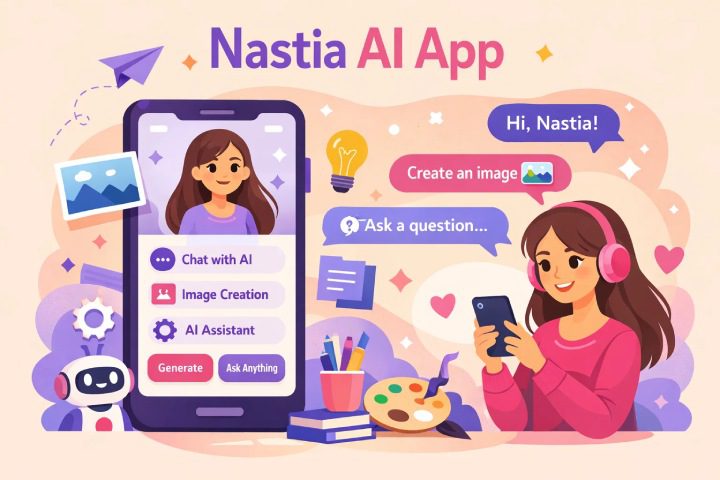
The growth of conversational technology is changing how people experience digital communication, with personalization becoming one of the strongest areas of development. nastia ai is part of this evolving space, focusing on conversations that can feel more individualized, responsive, and engaging. As interest in personalized digital experiences continues to rise, platforms built around adaptable communication are creating new possibilities for how users interact with AI.
Why are personalized conversations gaining attention?
Personalized conversations can make technology feel more relevant to individual users. Rather than offering a fixed communication pattern, an adaptive AI experience can respond according to the direction, tone, and context of an interaction.
This approach is particularly valuable because users do not communicate in identical ways. Some may prefer quick exchanges, while others may enjoy longer and more thoughtful conversations. Personalization creates room for both styles while keeping the overall experience simple.
What does digital companionship mean in the modern AI landscape?
Digital companionship refers to an interactive experience designed to provide ongoing conversation, engagement, and a sense of continuity. It does not necessarily depend on a single purpose. Instead, users can explore conversations based on their interests, moods, questions, or everyday thoughts.
The growing appeal of this concept can be understood through several experience factors: availability, responsiveness, personalization, and consistency. When these elements work together, digital interaction can become more enjoyable and naturally integrated into daily routines.
How can conversational AI make interactions feel more natural?
Natural communication depends heavily on context. When an AI system can respond appropriately to what has already been discussed, conversations can feel less mechanical and more connected.
Users may notice this through smoother follow-up exchanges, relevant responses, and fewer interruptions in the conversational flow. From a performance perspective, these qualities can be reflected in indicators such as conversation duration, repeat sessions, interaction frequency, and user engagement.
Which factors influence the quality of a personalized AI experience?
Several measurable characteristics contribute to the overall quality of conversational technology. Response relevance is one important factor because users want answers and interactions that match the current discussion.
Consistency is another valuable measure. A dependable communication style can make repeated interactions easier and more comfortable. Accessibility, interface simplicity, and conversational flexibility can further strengthen the experience.
Together, these factors create a useful framework for evaluating personalized digital communication.
Can personalized conversations encourage longer engagement?
A relevant and responsive interaction naturally gives users more reasons to continue a conversation. When an AI experience supports follow-up questions and changing topics smoothly, users can explore ideas without repeatedly restarting the interaction.
Engagement can be observed through metrics such as average session duration, returning-user activity, conversation depth, and interaction frequency. These measurements help illustrate how personalization can contribute to a more active digital experience.
What makes adaptability important for different users?
Adaptability allows an AI experience to accommodate different communication preferences. A user may want an informative discussion at one moment and a relaxed conversation at another. A flexible system can support these changing expectations without requiring complicated controls.
This ability to adjust can also improve usability. When technology works around the user’s communication style, the interaction becomes easier to understand and more enjoyable to maintain.
How could personalized digital companionship develop further?
The future of digital companionship is likely to place greater emphasis on meaningful interaction and individual preferences. As conversational technology becomes more sophisticated, users may expect AI experiences to become increasingly intuitive and context-aware.
Potential growth areas include improved personalization, richer conversational continuity, broader customization, and more engaging interaction models. These developments can expand the role of AI in everyday digital communication.
What is the overall value of personalized AI conversations?
The primary value lies in creating a digital experience that feels more relevant to the individual. Instead of approaching every user with an identical interaction model, personalized AI can offer greater flexibility and conversational depth.
For users, this can mean easier communication, more engaging exchanges, and greater freedom to explore different subjects. For the broader technology landscape, it represents a move toward more human-centered digital experiences.
Conclusion
Personalized conversations are opening a new chapter in the development of conversational technology. By combining adaptability, contextual interaction, consistency, and engagement, digital companionship can become a more natural part of everyday online experiences. As AI continues to advance, personalized communication has strong potential to create richer, more flexible, and increasingly engaging ways for people to connect with digital technology.