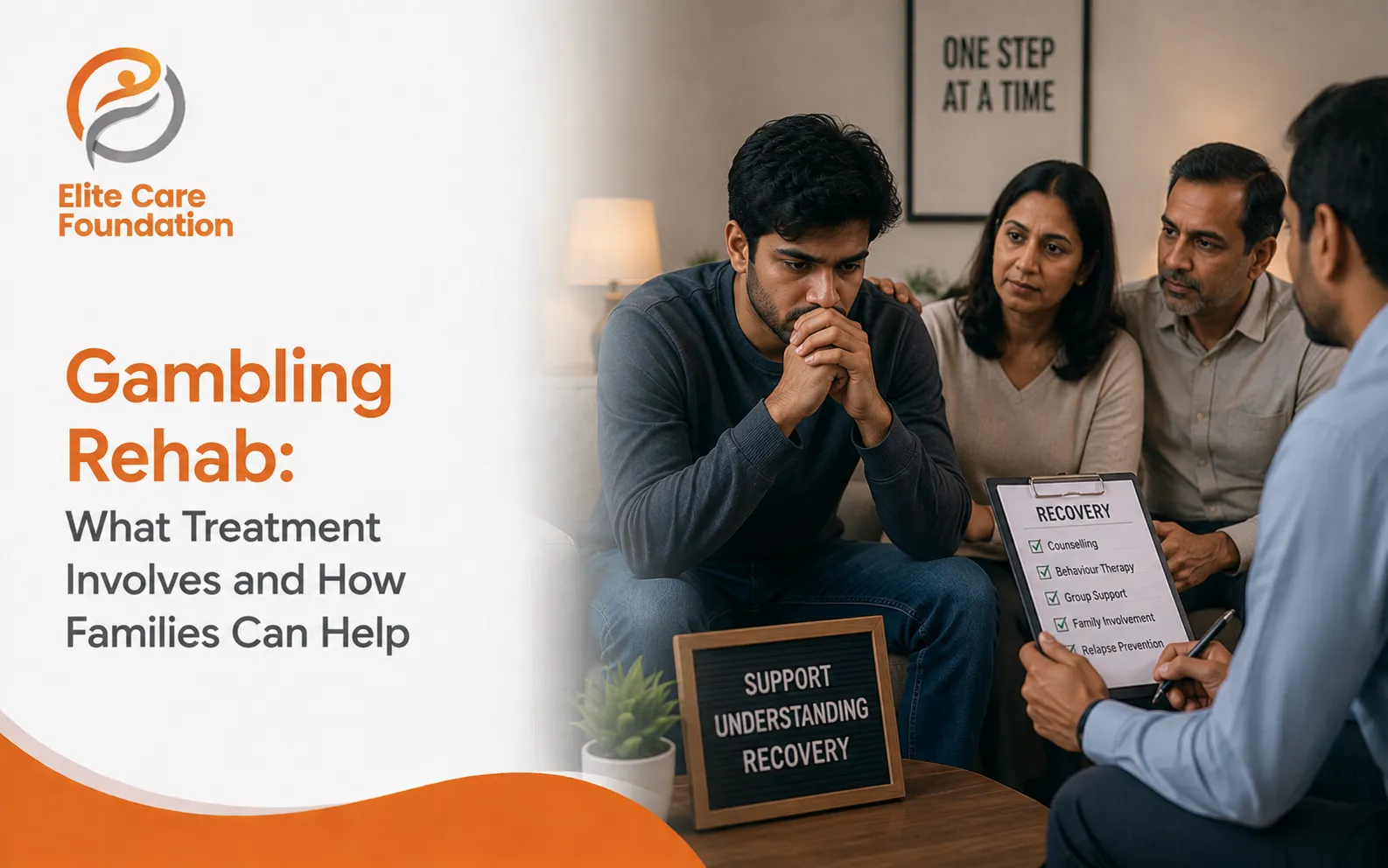
By the time a family considers gambling rehab, the visible debt may be only one part of the problem. There may also be secrecy, damaged trust, unpaid bills, work loss, alcohol use, anxiety or depression. Treatment must therefore do more than stop access to betting apps. It needs to address the reasons gambling continues and the harm already created.
What happens during assessment
A clinician asks about the type of gambling, frequency, money lost, borrowing, chasing losses and earlier attempts to stop. The review should include mood, sleep, alcohol and drug use, impulsivity and thoughts of self-harm. The World Health Organization’s ICD-11 identifies impaired control, increasing priority and continued gambling despite harm as the central pattern. Diagnosis depends on significant impairment, not on one isolated loss.
Financial information may be uncomfortable to discuss, but it guides safety planning. The team may ask about joint accounts, credit, business funds, loans, valuables and access to identity documents. These questions are not a debt-recovery service. Their purpose is to reduce immediate opportunity and understand the level of risk.
Treatment inside and beyond rehab
Psychological treatment may include motivational interviewing, cognitive behavioural therapy and relapse-prevention work. Sessions challenge beliefs about lucky sequences, near misses and winning back losses. The person also learns to manage urges, boredom, stress and access to money. Depression, anxiety or substance dependence needs treatment at the same time.
A nasha mukti kendra in Mumbai that treats gambling problems should offer more than a standard detox schedule. Residential care may help when access is uncontrolled, risk is high or home support has broken down. Other people may improve through structured outpatient care. The decision should follow an individual assessment rather than a fixed rule.
The family’s role
Families can protect essential expenses, change access to shared accounts and keep important documents secure. Changes should be lawful, transparent and proportionate wherever possible. Paying every hidden debt immediately may remove consequences without changing the behaviour. On the other hand, insults and public exposure can increase shame and hopelessness. Family sessions can set boundaries, disclosure rules and a response plan for future urges or lapses.
Planning for high-risk moments
Urges may rise after salary day, a sports event, an argument, alcohol use or contact from a betting group. A relapse plan names these situations before discharge. It can include bank alerts, blocked credit, removal from promotional groups and one person to contact before moving money. The plan should also say what happens after a lapse: stop further transfers, disclose the amount, protect essential payments and return to treatment promptly. Trying to win the loss back is not a recovery step.
Mumbai treatment should take account of the person’s job and control over business or household funds. A self-employed person may need different safeguards from a salaried employee. Financial protection and therapy should be reviewed together, with consent and lawful limits.
Good gambling rehab in Mumbai prepares the person for online access after discharge. Progress includes honest money records, fewer urges acted upon, repaired routines and early disclosure of risk. If the person speaks about suicide, vanishes after a major loss or appears unsafe, contact 112 or the nearest emergency department immediately.