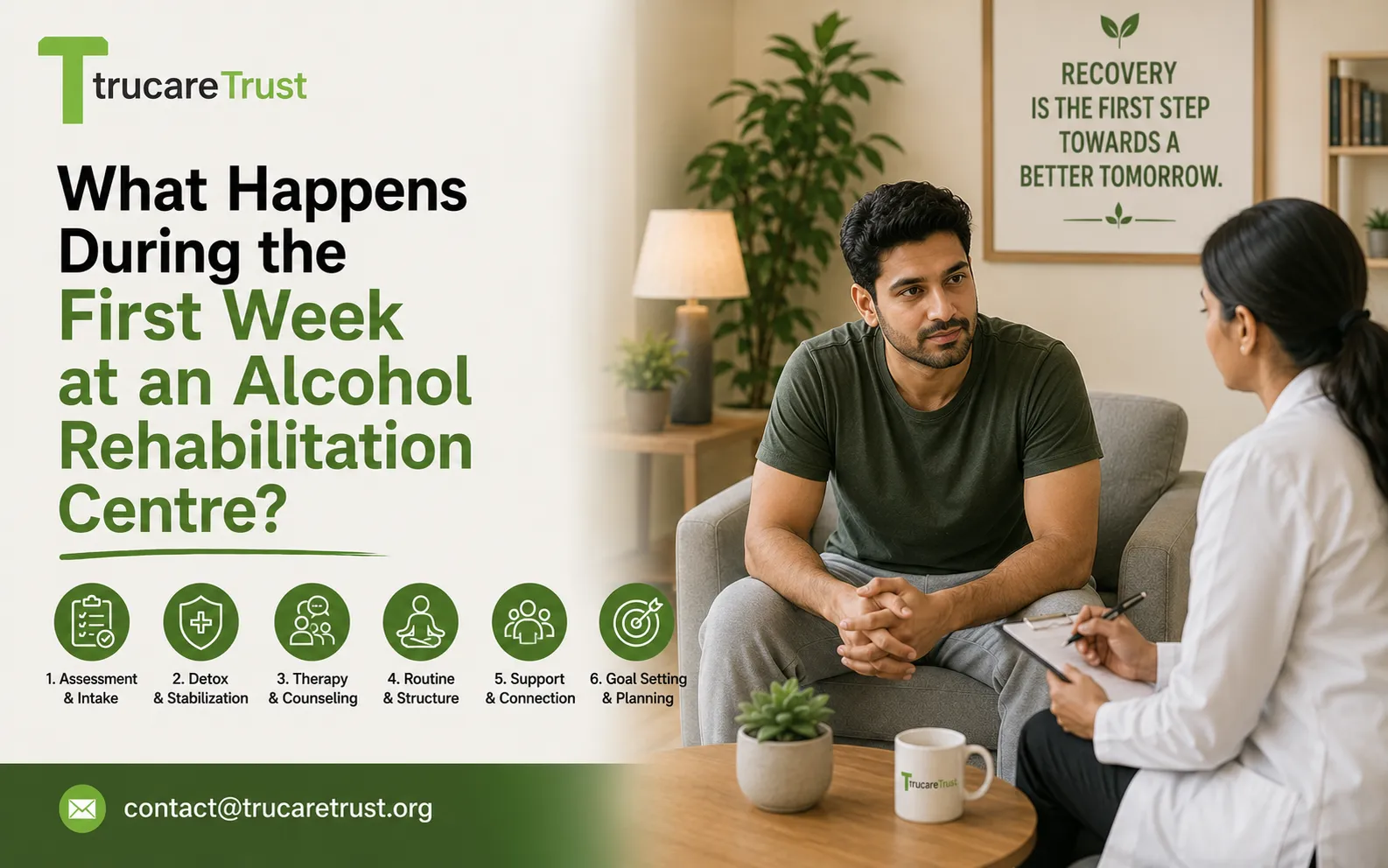
The first week of residential treatment is usually focused on safety, stabilisation and understanding the person’s needs. When considering an alcohol rehabilitation centre Mumbai, families should expect care based on an individual assessment rather than an identical timetable for every resident. Experiences vary according to drinking history, withdrawal risk, physical health and mental state.
Arrival and Initial Assessment
Admission generally begins with registration, consent and a review of permitted belongings. Clinical staff ask about the amount and frequency of drinking, the time of the last drink, previous seizures or delirium, prescribed medicines, medical conditions and emotional health.
Basic observations may include pulse, blood pressure, temperature, hydration, nutrition and orientation. Laboratory tests or hospital evaluation may be recommended when clinically necessary. Families should disclose previous withdrawal complications honestly, even when the information feels uncomfortable.
The First 24 Hours
Some residents arrive intoxicated, exhausted, anxious or ashamed. Staff first determine whether immediate hospital care or medically supervised withdrawal is required. Medicines may be prescribed for withdrawal symptoms, nutritional deficiencies, sleep disturbance or another diagnosed condition.
The resident is introduced to the room, daily schedule, safety rules and complaint process. Phone access or visits may be temporarily limited, but the reason and expected duration should be explained. Restrictions must have a genuine therapeutic or safety purpose.
Days Two and Three
Alcohol withdrawal can intensify during the first 24 to 72 hours, although timing differs between individuals. Staff should monitor symptoms such as shaking, sweating, agitation, nausea, changes in pulse and blood pressure, confusion or hallucinations. Seizures, severe disorientation or rapidly worsening symptoms require urgent medical response.
Not everyone experiences severe withdrawal. Some residents mainly need rest, hydration, regular meals and reassurance. Detoxification is not the complete treatment; it only prepares the person for the psychological and behavioural work that follows.
Days Three to Five
As concentration and sleep begin improving, counselling becomes more active. Early sessions explore drinking patterns, triggers, consequences, previous attempts to stop and personal recovery goals. The counsellor should build trust rather than demand immediate disclosure of painful experiences.
Group sessions may cover cravings, denial, emotional regulation and the effects of alcohol on health and relationships. Participation should reflect the resident’s stability. Someone still experiencing significant withdrawal may need shorter sessions and additional rest.
Days Five to Seven
By the end of the week, the clinical team usually refines the treatment plan. It may include individual counselling, group therapy, family meetings, psychiatric care, medication reviews, exercise and relapse-prevention work. Goals should be specific and reviewed as treatment progresses.
With appropriate consent, families may receive a general update and guidance on communication. Confidentiality means that private counselling details are not automatically disclosed. Relatives can ask about progress, emergencies, visiting arrangements and how they will participate in discharge planning.
What the First Week Cannot Decide
A calmer appearance after detox does not mean dependence has been resolved. Cravings, sleep problems, low mood and uncertain motivation may continue. Treatment length should not be decided solely by how the person looks after seven days.
Before choosing an alcohol rehabilitation centre Mumbai, families should ask who manages withdrawal, how emergencies are handled and when treatment planning begins. A safe first week establishes medical stability, respectful routines and a realistic foundation for continuing recovery.